
Real Installations. Real Numbers.
Three NJ systems. Three budgets. Real payback periods.
Get a Free Solar Quote
Contact us
See What Solar Saves You
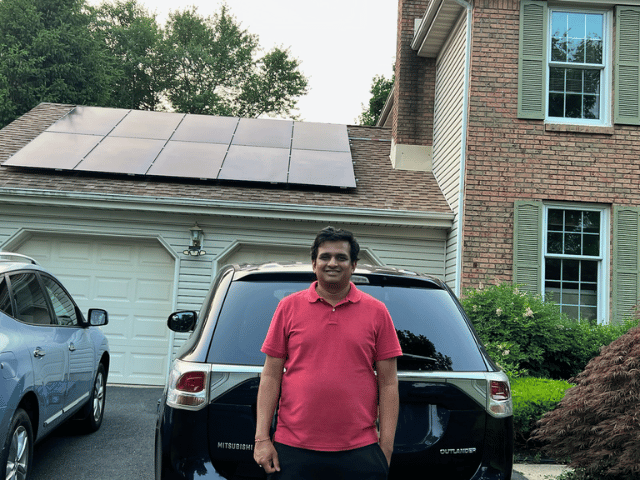
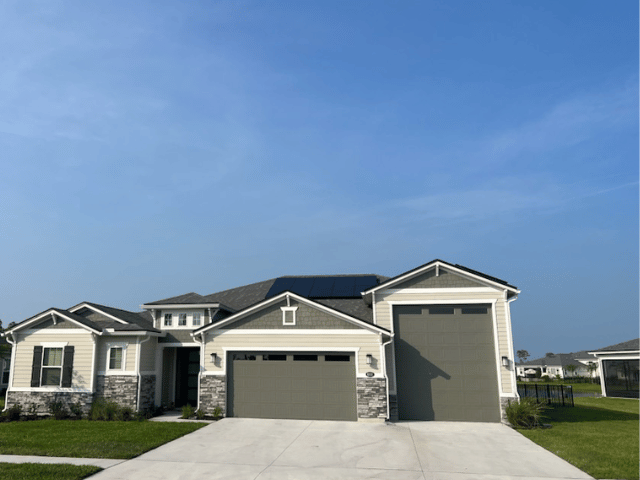
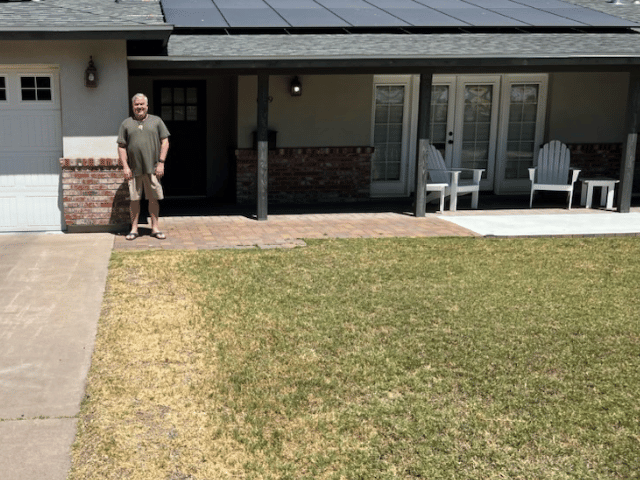
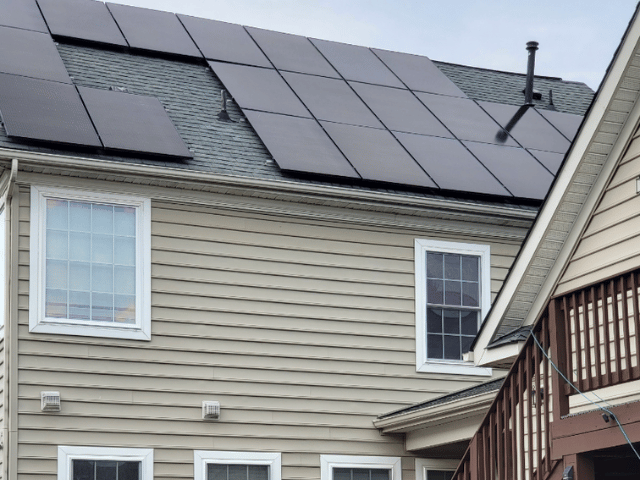
These are real systems I’ve designed and installed in New Jersey. Real costs, real production numbers, real payback periods. No estimates padded to make a monthly payment look good — just what the math says.
Both use New Jersey’s SuSI SREC program ($85/MWh locked in for 15 years from registration) and model electric savings growing at 3% per year — conservative, based on PSE&G and JCP&L historical averages. After year 15, SRECs are not included in the projections, so every number in the tables below is on the cautious side.
Case Study 1 — Premium System: REC 460W + Enphase IQ8X
REC panels are among the best performing residential panels available — high efficiency, excellent temperature coefficient for NJ summers, and a 25-year product warranty that REC actually honors. Paired with Enphase IQ8X microinverters (one per panel), this system gives panel-level monitoring and eliminates single-point-of-failure risk.
| System Specifications | |
|---|---|
| Panels | 25 × REC 460W Alpha Series |
| Inverters | Enphase IQ8X Microinverters (25 units) |
| Configuration | Roof-mounted, 11.5 kW total |
| System cost | $31,970 ($2.78/W) |
| Annual production | 14,100 kWh |
| Year 1 Financial Breakdown | |
|---|---|
| Electric bill savings (@ $0.21/kWh) | $2,961/year |
| NJ SuSI SREC income (14.1 SRECs × $85) | $1,199/year |
| Total Year 1 benefit: $4,160 — Payback: 7.7 years | |
The SuSI program locks in $85 per SREC for 15 years from registration — not from installation, from the date your system registers with the GATS tracking system. I handle that registration for every customer. After year 15, electric savings continue and grow with inflation; the projection below does not assume any SREC income after year 15.
| Year | Cumulative Electric Savings | Cumulative SREC Income | Total Savings | Net Return on Investment |
|---|---|---|---|---|
| 10 | $33,945 | $11,990 | $45,935 | +$13,965 |
| 15 | $55,071 | $17,985 | $73,056 | +$41,086 |
| 25 | $107,956 | $17,985 | $125,941 | +$93,971 |
Case Study 2 — Value System: Trina 445W
Trina Solar makes some of the best value panels on the market — tier-1 manufacturer, solid efficiency, reliable production data. This is the system I’d recommend when a homeowner wants strong ROI without the premium price. At $2.50/W it actually pays back faster than the REC system, because the lower cost more than offsets the slightly lower production.
| System Specifications | |
|---|---|
| Panels | 20 × Trina Vertex S+ 445W |
| Configuration | Roof-mounted, 8.9 kW total |
| System cost | $22,250 ($2.50/W) |
| Annual production | 11,100 kWh |
| Year 1 Financial Breakdown | |
|---|---|
| Electric bill savings (@ $0.21/kWh) | $2,331/year |
| NJ SuSI SREC income (11.1 SRECs × $85) | $944/year |
| Total Year 1 benefit: $3,275 — Payback: 6.8 years | |
Same SuSI program, same math. The shorter payback on this system is purely a function of the lower upfront cost. After payback, both systems run essentially free for the remaining panel lifetime — 25+ years standard warranty.
| Year | Cumulative Electric Savings | Cumulative SREC Income | Total Savings | Net Return on Investment |
|---|---|---|---|---|
| 10 | $26,722 | $9,435 | $36,157 | +$13,907 |
| 15 | $43,354 | $14,152 | $57,507 | +$35,257 |
| 25 | $84,987 | $14,152 | $99,139 | +$76,889 |
What These Numbers Mean
Both systems are profitable well before the panels hit their 25-year warranty. The premium REC system generates more total savings over time. The Trina value system pays back faster and still returns nearly $77K net over 25 years on a $22,250 investment.
Your numbers will be different — roof pitch, shading, utility, usage, and system size all affect the output. But the incentive structure is the same for every NJ homeowner: SuSI SRECs, full retail net metering, property tax exemption, sales tax exemption. The framework is solid. The question is just what size system fits your roof and usage.
Submit your monthly bill above and I’ll put together a real analysis for your home — same level of detail as what you see here, within 2 hours.
Case Study 3 — Solar + Battery: QCell 445W + Tesla Powerwall 3
This is the system for homeowners who want energy independence, not just a lower electric bill. QCell makes excellent panels — tier-1 manufacturer, strong efficiency, solid warranty. The Tesla Powerwall 3 is the most capable home battery on the market right now: 13.5 kWh usable storage, 11.5 kW continuous output, and native solar integration without a separate gateway.
One thing to understand upfront: the battery doesn’t generate SRECs and doesn’t directly add to the electric savings calculation I use below. The solar panels do. The battery adds something different — backup power when the grid goes down, and the ability to use your own stored solar instead of buying from the utility at peak rates.
| System Specifications | |
|---|---|
| Panels | 24 × Qcells Q.PEAK DUO 445W |
| Battery | 1 × Tesla Powerwall 3 (13.5 kWh usable, 11.5 kW continuous) |
| Configuration | Roof-mounted, 10.68 kW solar |
| Total system cost | $37,632 (solar + Powerwall 3 installed) |
| Annual solar production | 12,330 kWh |
The $3.52/W figure you’d get dividing total cost by panel wattage is misleading — it includes the battery. The solar panels alone are priced at $2.49/W, which is in line with my other QCell and value-tier systems. The Powerwall 3 accounts for roughly $11,000 of the total cost.
| Year 1 Financial Breakdown (solar savings only) | |
|---|---|
| Electric bill savings (@ $0.21/kWh) | $2,589/year |
| NJ SuSI SREC income (12.33 SRECs × $85) | $1,048/year |
| Total Year 1 solar benefit: $3,637 — Full system payback: 10.3 years | |
The honest battery trade-off: Without the Powerwall, this solar system pays back in 7.3 years. Adding the battery extends that to 10.3 years — that’s the real cost of storage. What you get for those extra 3 years of payback time: your home keeps running during outages. In New Jersey, that’s not hypothetical. We’ve had Sandy, Ida, and enough winter storms that most homeowners with batteries tell me it was worth it the first time the lights stayed on while the neighbors were dark. I don’t push batteries on customers who are focused purely on ROI. But if backup power matters to you, this is the system.
| Year | Cumulative Electric Savings | Cumulative SREC Income | Total Savings | Net Return on Investment |
|---|---|---|---|---|
| 10 | $29,683 | $10,480 | $40,163 | +$2,531 |
| 15 | $48,158 | $15,721 | $63,879 | +$26,247 |
| 25 | $94,404 | $15,721 | $110,125 | +$72,493 |
The 10-year net return looks modest compared to the solar-only systems. That’s accurate — the battery costs money that the solar savings have to recover. By year 15 the system is solidly in profit, and at 25 years the return is $72K on a $37,632 investment. Panels carry a 25-year product warranty. The Powerwall 3 carries a 10-year warranty with a 70% capacity guarantee.
Comparing All Three Systems
| System | Cost | Size | Annual Benefit | Payback | 25-yr Net |
|---|---|---|---|---|---|
| REC 460W + Enphase IQ8X | $31,970 | 11.5 kW | $4,160/yr | 7.7 yrs | +$93,971 |
| Trina 445W (value) | $22,250 | 8.9 kW | $3,275/yr | 6.8 yrs | +$76,889 |
| QCell 445W + Powerwall 3 | $37,632 | 10.68 kW + battery | $3,637/yr | 10.3 yrs | +$72,493 |
The value Trina system has the fastest payback. The premium REC system generates the most savings over time. The QCell + Powerwall system costs the most and has the longest payback — but it’s the only one that keeps your home running when the grid goes down. Which one is right depends on your roof, your usage, and what you’re actually trying to solve.
Submit your bill above and I’ll tell you which of these makes sense for your specific home — or if something different fits better.


Design & Developed by Viaansh Infotech LLP